Choosing a Sleeping Bag

The most important thing to consider while choosing a sleeping bag is the purpose. Why are you buying this sleeping bag? The type of bag you buy to go on a two day trek in the summer is going to be very different than one you use for say a mountaineering expedition climbing a 6,000 meter mountain. 

That being said, regardless of where you’re going, investing time and energy researching the type of sleeping you need is always a good idea. While you might spend a majority of your time outside your bag, it’s the time spent inside your bag that will give you the energy to perform well and enjoy your experience outdoors. 

When it comes to purpose there are four things you should take into account.

1. Warmth. Being too cold in your bag is not a fun experience, and you always want to check the temperature rating of the bag (make sure you’re looking at the ‘comfort’ rating, not the extreme) and compare it to the coldest temperature of your trek or expedition. 

2. Okay great you’re warm enough? The next thing I’m looking at is the size of the bag. You want to make sure that if you’re a taller person the bag will fit you. You need to test the bag out before you go on the climb. Always err on the side of caution, and go for a slightly bigger bag if you’re confused, I like to be able to fit in my bag while wearing at least two layers.

There are many shapes as well – the two most common ones being the rectangle  and the mummy bag. I would strongly recommend a mummy bag for colder temperatures (i’m talking about anything below 10 degrees celsius here). 

3. The next thing you want to look at is the weight of the bag. If you are carrying all of your equipment yourself, you don’t want to be lugging around a HUGE extra weight, even 250 grams can start to feel like a lot if it’s on your back for 14 hours. If this is an assisted trek aka support team with porters or mules on your trek, then the priority of this weight factor goes down. 

4. Finally, the cost. This is a big one right. If this is your first time hiking, and you’re not sure whether you will do it again, it might be tempting to opt for the cheapest bag you find. If you do this, trust me chances are you won’t go out again for sure. Choose a bag that is in the middle range, and that fits all the criteria that I mentioned before. If you’re going on a more extreme trek or expedition, then you have to be ready for a bigger investment as there are a lot more factors at play, and having insufficient equipment can be dangerous. 

A Sea Kayaking Expedition In Greenland

My family’s idea of a holiday is not a typical “relax on the beach and go sightseeing” sort of holiday, it’s more like a “lets climb up this mountain while it’s raining” sort of holiday. So, when dad decided it was time for a father daughter bonding trip, I wasn’t too surprised when he suggested a two-week sea kayaking expedition in the fjords of Greenland.


After spending months preparing for the expeditions (including training and logistics) we finally started on our journey to Greenland. The travel involved getting from New Delhi to the starting point of our expedition was intense! From New Delhi we took a direct flight to Copenhagen. We spent a night at Copenhagen and then took a flight to Kangerlussuaq in Greenland, from there we took another flight to Ilulissat, where we spent the day shopping for supplies for our expedition.  We got on a helicopter from Ilulissat to Umanaq and spent time there getting all our gear prepared. From Umanaq we got on a motor boat with all of our expedition gear and kayaks and to (finally!) reach our first expedition campsite.

Along the coast of Greenland: A bench overlooking the icebergs

We would kayak along the coast everyday till we got to our next campsite. After we secured our kayaks, we would set up the group tent before setting up any of our personal tents. We would all eat breakfast and dinner in the big group tent together. Our expedition leader Kim would usually be the chef, but sometimes other team members would take over.

On one of the final days of our expedition, halfway to our next campsite, the weather suddenly turned.  We were kayaking along a cliff and there were huge freezing cold salt water waves splashing on us. The salt water made my eyes burn- I could barely keep them open. I remember being cold and miserable, but knowing that we couldn’t stop, all of us had to paddle past the cliff. I was 14 years old, and had never experienced a situation so extreme and challenging before. I  remember my father kept encouraging me from behind and yelling “keep going Deeya, Keep smiling, We will get through this”.

Hearing that positivity in his voice, helped me grit my teeth and keep going. We finally did make it to the next camp drenched and frozen but safe. I think this where I began to realise how important a positive attitude is when it comes to any adventure sport. If the going gets really tough and you think you can’t do it, you definitely will not make it. However, if you plaster a smile on your face and tell yourself you can do it, the going definitely becomes easier. 

Sea Kayaking in Greenland

There are of course difficult moments on all expeditions, but what makes them special are the team members. I remember I was a bit nervous about going on the expedition, because I was going to be the youngest by quite a margin – 28 years to be specific (the closest person to my age was my dad). I soon understood that being outdoors with people is the best way to make friendships that last a lifetime. It doesn’t matter where your team members are from or what age they are, there’s something magical about being outside and facing the wonders and challenges of mother nature together.

Post adapted from an account I wrote when I was 14 years old right after my first ever expedition, a 2-week long sea kayaking expedition along the coast of Greenland.

The Beginning…

I often joke that my parents first child was not me but Snow Leopard Adventures – our family owned Adventure Tourism company which was conceived before I was born. My father is one of India’s stalwarts in the outdoors (he was the first Indian to kayak and raft down rivers in six continents, as well as the first Indian to complete the polar trilogy- skiing to the North Pole, South Pole and skiing across the Greenland icecap).

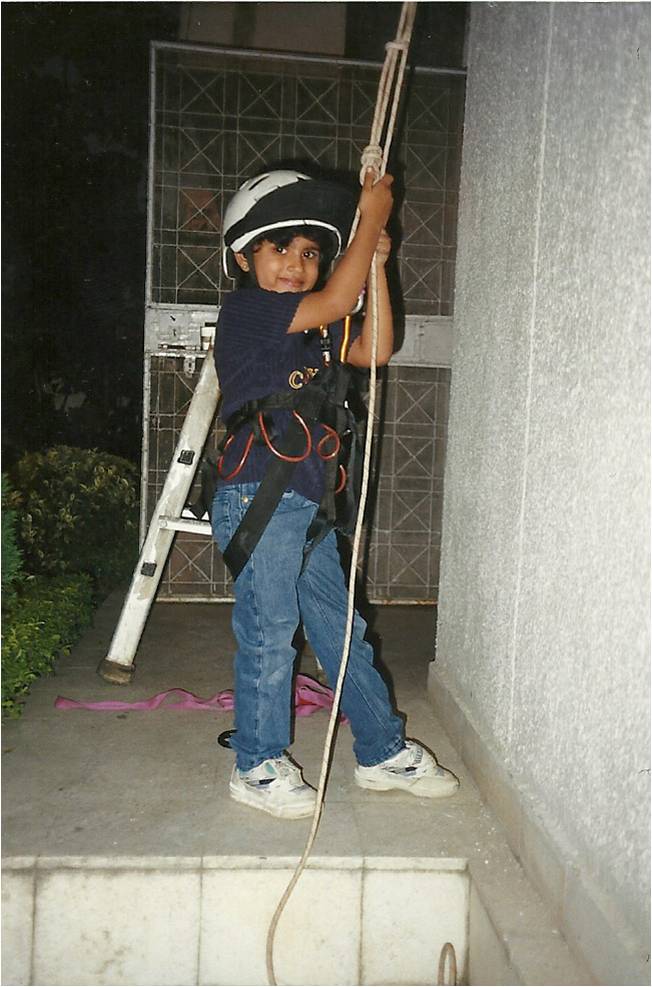
Growing up in a family like this, adventure was our normal. I went on my first hike strapped to my fathers back, before I even started walking. Our family holidays would consist of doing something outdoors whether it be hiking, diving or skiing, and I absolutely loved it.

My passion for mountaineering started in the summer before grade 8 at the Nehru Institute of Mountaineering’s (NIM) adventure course. Growing up in India’s National Capital Region, the life I lead in NIM was very different from anything I had experienced before. It was simpler, the days were long and the learnings were life changing. I realised that I was happiest in the company of mountains, walking for hours with everything I needed my backpack.

From then on I jumped at every opportunity I got to be outdoors. My parents understood that the outdoors was a big part of my life, and they encouraged me to follow my passion. While supporting your children’s passions might seem like an obvious thing to do, in India girls aren’t often given the same opportunities as boys. I recognised, at a very young age, that what I had in terms of parental support was unique.

I am grateful for the fact that my parents have always supported me and left no stone unturned in helping me pursue my dreams. To my mother for constantly showing me what a privilege it is to be a woman, and to never let me gender define me and to my father for introducing me to the “great outdoors” and being my favourite “adventure buddy”.

Hi! My name is Deeya Bajaj and I am a mountaineer, adventurer and explorer from India. I have been extremly fortunate to have had the opportunity to explore some of the most remote parts of our planet (including to journey to the summit of Mt. Everest with my father, as India’s first father-daughter team). This blog is an attempt to document some of my learnings and experiences on my expeditions. Thank you for being a part of my journey! Keep checking this site (or subscribe to get an instant update) for more posts on my adventures all over the world!